Last updated:

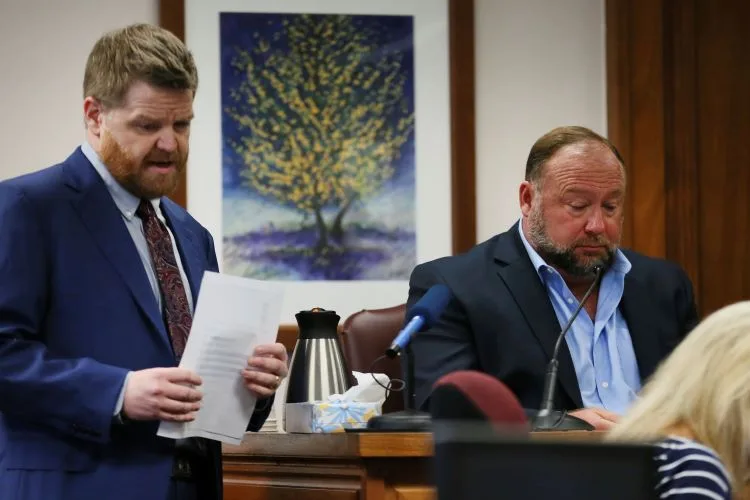
The recent Alex Jones judgment reduction has sent shockwaves through legal circles and among families affected by the Sandy Hook tragedy. On June 21, 2024, a Texas appeals court drastically lowered the amount Jones was ordered to pay for his role in spreading false claims about the 2012 Sandy Hook Elementary School shooting, citing state laws that cap certain types of damages.
This decision, which slashed a $50 million award down to about $6 million, has reignited debate over lawsuit damages, free speech, and accountability for misinformation. As the legal saga continues, the implications reach far beyond Alex Jones and the families involved, touching on bankruptcy law, the limits of punitive damages, and the long-term ramifications for similar high-profile lawsuits.
The Legal Journey: How the Alex Jones Judgment Reduction Unfolded
The Alex Jones judgment reduction stems from lawsuits filed by the families of Sandy Hook victims, who accused Jones and his media company, Free Speech Systems, of defamation and emotional distress. For years, Jones falsely claimed the 2012 massacre was a hoax, subjecting families to harassment and public scrutiny. In 2022, a Texas jury found Jones liable, originally awarding $4.1 million in compensatory damages and $45.2 million in punitive damages to Neil Heslin and Scarlett Lewis, parents of a 6-year-old victim.
Texas, however, has strict laws capping punitive damages at $750,000 per plaintiff. This restriction became the focal point when Jones appealed the jury’s decision. On June 21, 2024, the Texas Third Court of Appeals ruled that, while the compensatory damages stood, most of the punitive damages had to be reduced. The final amount Jones must pay is now just over $6 million, a significant drop from the jury’s original award.
Despite this reduction, the court upheld the core finding of defamation against Jones. The families’ legal victory in establishing liability remains intact, even as the financial penalty is diminished by state law.
Understanding Compensatory vs. Punitive Damages
In the context of the Infowars lawsuit, it’s important to distinguish between compensatory and punitive damages. Compensatory damages are meant to reimburse plaintiffs for actual harm suffered, including emotional distress, reputational damage, and out-of-pocket expenses. In this case, Neil Heslin and Scarlett Lewis were awarded more than $4.1 million to compensate for the trauma and harassment they endured following Jones’s broadcasts.
Punitive damages, by contrast, are designed to punish the defendant for particularly egregious behavior and to deter similar misconduct in the future. The original $45.2 million in punitive damages reflected the jury’s outrage at Jones’s continued denial and inflammatory rhetoric. However, Texas law limits these damages to $750,000 per plaintiff, no matter how outrageous the conduct or how much wealth the defendant has.
This legal framework is intended to prevent runaway jury awards and ensure that punitive damages remain proportionate. Critics argue that such caps can undermine the deterrent effect of large judgments, particularly in cases where high-profile defendants profit from their misconduct.
The Sandy Hook Hoax Damages: Broader Legal Context
The Sandy Hook shooting on December 14, 2012, remains one of the deadliest school attacks in U.S. history. Jones’s repeated false claims that the massacre was staged led to years of harassment for the victims’ families, including death threats, doxing, and relentless online abuse. The lawsuits filed in both Texas and Connecticut aimed to hold Jones accountable for these consequences.
While the Texas appeals court reduced the payout, the underlying harm recognized by the courts is clear. In Connecticut, separate litigation resulted in a $1.25 billion judgment against Jones and his company—an eye-popping figure that dwarfs the amounts discussed in Texas. Yet, collecting on these judgments remains a challenge, as Jones’s finances have come under increasing legal scrutiny.
The table below summarizes the key judgments against Alex Jones related to the Sandy Hook hoax damages:
| Jurisdiction | Original Judgment | Reduction/Cap | Final Amount |
|---|---|---|---|
| Texas (Heslin & Lewis Case) | $50 million | Punitive Damages Cap | ~$6 million |
| Connecticut | $1.25 billion | No Cap | $1.25 billion |
Impact on Alex Jones: Bankruptcy and Asset Liquidation
The enormous judgments prompted Alex Jones and Free Speech Systems to file for bankruptcy protection. Bankruptcy court filings reveal that Jones’s personal assets and those of his company are being liquidated to pay creditors, including the Sandy Hook families. The process is complex and ongoing, with Jones’s actual net worth and the value of his assets under intense scrutiny.
Filing for bankruptcy does not automatically erase court-ordered damages for intentional torts like defamation. The Sandy Hook families’ claims are classified as non-dischargeable, meaning Jones cannot simply walk away from these debts. However, bankruptcy can slow down or complicate the process of collecting large judgments, especially when assets are limited and the defendant’s income is difficult to track.
For the families, the reality is that collecting the full amounts awarded by the courts could take years—if it happens at all. For Jones, the prospect of ongoing litigation, asset sales, and public scrutiny is unlikely to disappear soon.
Why Did the Appeals Court Reduce the Alex Jones Judgment?
The Texas appeals court’s decision to reduce the Alex Jones judgment rested on state law. Texas Civil Practice and Remedies Code limits punitive damages to $750,000 per plaintiff, regardless of the jury’s findings or the severity of the conduct. This cap has been in place since 2003 and is intended to provide predictability and fairness in civil litigation.
In its ruling, the Texas Third Court of Appeals acknowledged the jury’s outrage but said it was bound by the statutory cap. The court maintained the $4.1 million in compensatory damages for emotional distress and reputational harm, but it cut punitive damages from $45.2 million to $1.5 million (for two plaintiffs).
- Punitive damages capped at $750,000 per plaintiff
- Compensatory damages for actual harm remain untouched
- Defamation finding against Jones upheld
- Outcome governed by Texas state law, not the jury’s discretion
Legal experts point out that similar caps exist in other states, though the amounts and details vary. While the reduction is a relief for Jones financially, the legal precedent is well established and not unique to his case.
What’s Next for the Sandy Hook Families and Jones?
The Texas ruling does not end the legal saga for either side. Jones still faces the $1.25 billion Connecticut judgment, and bankruptcy proceedings continue in both state and federal courts. The families’ lawyers have made clear that they will pursue every available avenue to secure compensation and hold Jones accountable.
The appeals process could continue, though the likelihood of further significant reductions is low unless higher courts challenge the constitutionality of damage caps. Meanwhile, the Supreme Court recently declined to intervene in the Connecticut case, leaving Jones on the hook for the full amount there.
For the Sandy Hook families, the reduced Texas judgment is disappointing but not unexpected. Their priority remains a sense of justice and public acknowledgment of the harm done, even if the financial penalties are limited by law.
Frequently Asked Questions
What is the Alex Jones judgment reduction?
The Alex Jones judgment reduction refers to the Texas appeals court decision lowering a $50 million damages award against Jones to about $6 million, due to state laws limiting punitive damages in civil lawsuits.
Why were the damages in the Infowars lawsuit reduced?
The damages were reduced because Texas law caps punitive damages at $750,000 per plaintiff. The appeals court was legally required to follow this statute, even though the original jury awarded over $45 million in punitive damages.
Does the judgment reduction mean Alex Jones is off the hook?
No, the court maintained the finding of defamation against Jones. The reduction only affects the amount he has to pay, not the fact that he was found liable for spreading false and harmful claims about the Sandy Hook shooting.
How does Alex Jones’s bankruptcy affect the Sandy Hook families?
Jones’s bankruptcy complicates the collection of damages. While bankruptcy doesn’t eliminate debts for intentional torts like defamation, it can slow down the process and reduce the amount victims ultimately recover, especially if Jones’s assets are limited.
Are there other large judgments against Alex Jones?
Yes. In addition to the Texas case, a Connecticut court ordered Jones to pay $1.25 billion to other Sandy Hook families. This amount is not subject to the same punitive damages cap, making it one of the largest defamation judgments in U.S. history.
Conclusion
The Alex Jones judgment reduction highlights the complicated intersection of free speech, civil liability, and state law. The reduction from $50 million to $6 million in Texas underscores how damage caps can reshape high-profile verdicts, even when juries seek to impose steep financial consequences. Meanwhile, the Sandy Hook families continue seeking accountability and healing, while Jones faces ongoing bankruptcy proceedings and massive judgments in multiple states.
For more updates on the Infowars lawsuit, Sandy Hook hoax damages, and major developments in defamation law, subscribe to our newsletter or follow our legal analysis blog. Your feedback and questions are always welcome as this landmark case continues to evolve.